Choosing the right kitchen cabinet modern style can feel overwhelming, especially when design trends shift faster than ever and the options seem endless. But here is the good news: once you understand the core styles available today, finding the right look for your home becomes far simpler.
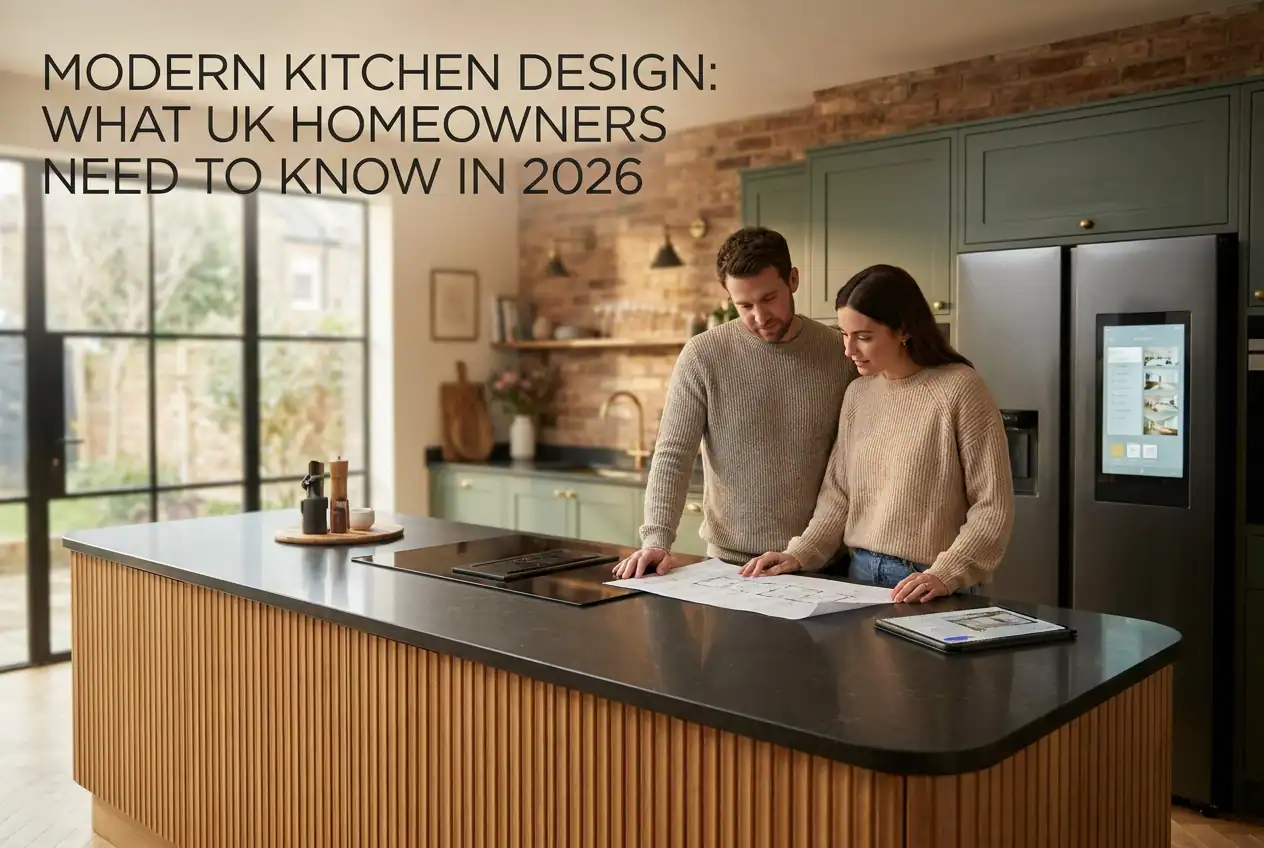
Kitchen design in 2026 is moving in a clear direction. Warm, earthy tones are replacing the cold greys and stark whites that dominated recent years, and cabinets are becoming more expressive without sacrificing function. Whether you are drawn to clean, handle-free minimalism or the timeless appeal of a Shaker-influenced design, there is a modern kitchen style that genuinely fits your space and lifestyle.
In this guide, we break down the most popular modern cabinet styles on the market right now. You will learn what “modern” actually means in practical terms, how different styles suit different kitchen sizes and layouts, and how to choose a colour direction with confidence. We also cover the key differences between bespoke and off-the-shelf cabinets, so you can make a decision that works for your budget and your vision.
What Does ‘Modern Style’ Actually Mean for Kitchen Cabinets?
“Modern” is one of the most overused words in kitchen design, and also one of the least defined. In practice, it covers several distinct design subcategories, among them minimalist modern, urban contemporary, transitional Shaker-influenced, and handcrafted artisan modern, each with its own visual language, material palette, and spatial logic.
The 2026 design landscape has also shifted the goalposts. Design research confirms that all-white and cool-grey minimalism is being replaced by warmer, more organic aesthetics: natural stone textures, reclaimed timber, and softer finishes now define what contemporary actually looks like.
Understanding which modern cabinet style suits your lifestyle and property is the essential first step, well before you consider colours, handles, or layouts. The sections below break down each subcategory clearly.
Minimalist Modern: Clean Lines and Handle-Free Design
The first of the five modern subcategories is also the most architecturally disciplined. Minimalist modern kitchens are defined by flat-front slab doors, integrated appliances with panel-ready fronts, and handle-free mechanisms including push-to-open and recessed gola profiles. Every decision removes visual information rather than adding it.
This style performs best in open-plan living spaces where the kitchen becomes an extension of the room’s structure rather than a separate element within it.
Colour in 2026 has shifted within this category toward warmer neutrals, a move confirmed by broader 2026 design trend analysis, replacing the coolest whites and greys of recent years. The result is a minimalism that feels considered and liveable rather than clinical.
Integrated under-cabinet and in-unit lighting reinforces the seamless aesthetic without introducing hardware or fixtures that break the surface. LED strip lighting recessed beneath wall units provides practical task illumination while keeping the overall composition visually quiet.
Where this style demands the most precision is in the fit. Flat-front cabinetry leaves no room for visual compromise. Broadoak’s bespoke approach means minimalist cabinets are precision-built to your exact room dimensions, accommodating alcoves, sloped ceilings, and irregular walls that standard flat-pack units simply cannot address.
Urban Contemporary: Bold Geometry and Industrial Contrasts
Where minimalist modern strips everything back, urban contemporary makes a deliberate statement through contrast and material tension.
This style works through strong material pairings such as matte cabinetry against brushed brass hardware, raw concrete-effect worktops alongside lacquered cabinet fronts, or exposed metal detailing that references industrial architecture. The friction between textures is intentional, and it is what gives urban contemporary its visual energy.
Dark colour palettes anchor the look, deep charcoal, slate, and navy are popular directions, and each demands good lighting. Kitchens with strong natural light or layered task lighting handle these tones confidently; dimly lit rooms can struggle. This is a style that rewards considered lighting design.
This style tends to suit statement-led spaces, think open-plan kitchen-diners, city apartments, or converted industrial properties, where the kitchen is visible from the living space and functions as an architectural feature rather than a background utility. If you are comparing bespoke fitted units against standard flat-pack options, this style in particular exposes the difference in finish quality and precision.
Geometric cabinet configurations add further interest. Stacked wall units at varied heights and asymmetric open shelving create a layered elevation without requiring structural changes to the room.
Hardware is not an afterthought here. Bar handles, T-bar profiles, and mixed-metal finishes are the details that complete the design. Swapping hardware on an otherwise plain cabinet can shift the entire character of the scheme.
Transitional Modern: The Shaker-Influenced Style Dominating UK Homes
Where urban contemporary suits bold, statement-led spaces, transitional modern takes a different approach, one that works quietly and confidently across almost any British home.
Transitional modern bridges classic craftsmanship with contemporary simplicity. It sits comfortably in new builds and period properties alike, which gives it broad appeal across UK homes.
The Shaker door profile is central to this style. Its framed panel construction introduces subtle depth and texture that flat-front cabinets simply cannot replicate, adding warmth without any heavy ornamentation. The result feels considered rather than cold.
Colour versatility is a genuine strength here. Transitional Shaker cabinets work across warm white, sage green, navy, and deep forest tones with equal confidence, making them a reliable foundation regardless of your wider colour direction.
Hardware choices reinforce the balance between old and new. Cup handles, ceramic knobs, and slimline bar pulls all complement the Shaker profile without tipping the design toward either traditional or industrial territory.
For homeowners renovating period properties, the framed Shaker door tends to respect existing architectural proportions rather than clash with them.
If you want to explore the full range of Shaker options in depth, the Shaker Kitchens: The Complete UK Homeowner’s Guide covers every style variation, colour, and consideration for 2026.
Handcrafted Modern: When Artisan Detail Meets Contemporary Function
Where the Shaker style bridges tradition and today, artisan modern takes a different path: it makes craftsmanship itself the visual statement.
Hand-painted finishes, bespoke joinery details, and tactile surfaces define this approach. Every visible element communicates individuality rather than the uniformity of a catalogue range. Fluted cabinet profiles are a typical detail that marks artisan modern as something genuinely made rather than assembled.
Natural materials sit at the heart of this style. Natural timber has seen a decisive comeback in 2026, with oak, walnut, and limed finishes increasingly preferred over painted cabinetry, reflecting a broader shift toward organic warmth and tactile character across contemporary UK homes.
Artisan modern suits homeowners who want a kitchen that feels personal and lived-in, impossible to replicate from any showroom. It pairs best with natural stone worktops, unlacquered brass fixtures, and zellige or handmade ceramic splashbacks that each carry their own subtle variation and texture.
Broadoak’s bespoke cabinetry process is a natural fit here. Client input shapes every decision, from timber species to joinery profile, meaning no two kitchens share the same result. That is precisely what artisan modern demands.
Warm Earthy Modern: The Defining Trend in Kitchen Design for 2026
Where artisan modern celebrates visible craft, warm earthy modern applies that same organic sensibility to a cleaner, more streamlined cabinet profile.
The 2026 design direction has moved clearly toward warm earthy neutrals, with cooler palettes giving way to organic tones. The palette spans warm taupes, earthy clay tones, natural oak, and muted greens, all organic in character, without abandoning a contemporary silhouette.
While it translates across property types, it particularly suits spaces where drawing the interior into dialogue with natural surroundings is a design priority.
Worktop and splashback choices are critical here. Matte and honed worktop surfaces, and handmade or textured splashback tiles, reinforce the earthy palette better than polished alternatives. Gloss finishes work against this aesthetic; matte and tactile textures work with it.
For homeowners who find pure minimalist modern too stark but want to stop short of traditional or classic cabinetry, warm earthy modern occupies exactly the right middle ground. It feels current without feeling clinical.
Choosing a Colour Direction for Your Modern Kitchen Cabinets
Once your style direction is set, colour becomes the decision that shapes how the space actually feels to live in.
- Black cabinets project confidence and drama. They work best in larger kitchens or bold open-plan spaces where a well-designed kitchen island can act as a visual anchor, preventing the palette from feeling oppressive.
- White and off-white maximise perceived space and light. They are particularly effective in galley kitchens or rooms with limited natural light, where a darker colour would make the space feel enclosed.
- Grey remains versatile, but warm grey tones are the more design-forward choice in 2026, aligning with the broader shift toward earthy, organic palettes.
- Blue and green introduce personality and a connection to nature. Sage and forest greens sit naturally within warm earthy modern schemes.
The underlying principle across all five colours is the same: the right choice should reflect how you use the space, how much natural light it receives, and whether the kitchen is a self-contained room or flows into a wider living area. Colour that works beautifully in a light-flooded open-plan layout can feel heavy in a north-facing galley.
How Modern Cabinet Styles Adapt to Different Kitchen Sizes and Layouts
Shape and scale determine which modern style will actually work in practice.
Galley kitchens respond best to minimalist modern or transitional Shaker styles. Streamlined profiles reduce visual clutter, and gloss or satin finishes reflect light across the narrow run, preventing the space from feeling enclosed.

Open-plan kitchen-diners suit urban contemporary and warm earthy modern styles, where cabinetry is visible from living areas and contributes to the overall room aesthetic rather than operating in isolation.
Kitchen islands serve as both a practical work surface and a social focal point. Their cabinet style should harmonise with the perimeter units or deliberately contrast them; a warm oak island against painted cabinetry adds considered visual tension.
L-shaped and U-shaped layouts suit artisan and handcrafted modern styles particularly well. The extended run of cabinetry provides generous surface area to display hand-painted finishes, tactile materials, and bespoke joinery details.
Ceiling height is a frequently overlooked variable. Tall ceilings support stacked cabinetry and vertical proportions that reinforce urban contemporary aesthetics. Lower ceilings benefit from horizontal configurations and lighter palettes that keep the space feeling open.
If you want a style choice that accounts for all these variables, it helps to choose a style that will still feel right in years to come rather than one that suits only the trend of the moment.
Bespoke vs. Off-the-Shelf Modern Cabinets: Understanding the Difference
Once you’ve matched style to layout, the next decision cuts deeper: how the cabinets are actually made and specified.
Off-the-shelf modern cabinets come in fixed widths, standard heights, and a limited range of finishes. Even a carefully chosen range will demand compromise, whether that’s a filler panel bridging an awkward gap, a colour that’s close but not quite right, or a configuration that doesn’t suit how you actually use the space.
Bespoke modern cabinets are drawn to your kitchen’s exact dimensions. There are no filler panels, no visual inconsistencies, and no standard-unit logic forcing your layout into a shape that doesn’t fit your room.
Construction quality separates the two further. Bespoke cabinetry is typically built to a higher construction specification, solid frames, quality drawer mechanisms, rather than treating these as costly upgrades.
At Broadoak Kitchens, the bespoke process begins with a full design consultation. Every decision, from cabinet profile and handle placement to internal storage configuration, is shaped around your specific requirements rather than a manufacturer’s catalogue.
The longevity case for bespoke is straightforward. A precision-built kitchen designed for your home will outlast several cycles of flat-pack replacement. The upfront investment reflects a lifespan measured in decades, not years.

Finding Your Modern Kitchen Cabinet Style with Broadoak
Modern kitchen cabinet style spans five distinct aesthetics: minimalist modern, urban contemporary, transitional Shaker, handcrafted artisan, and warm earthy modern. Each has a different visual language, material palette, and spatial personality. There is no single correct interpretation.
The 2026 shift toward warm earthy neutrals is worth noting not as a trend to chase blindly, but as a signal that contemporary kitchens can now feel genuinely welcoming rather than clinical. Warm taupes, clay tones, and natural oak sit comfortably within a modern framework.
The right starting point is never a trend. It is your space, your daily routine, and the aesthetic that genuinely appeals to you. A galley kitchen in a Victorian terrace calls for different decisions than an open-plan new build, regardless of what is popular this year.
Broadoak Kitchens works with homeowners at every stage of planning, from early ideas through to projects ready to begin within weeks. Whether you are 12 months out or ready to move now, the process starts the same way.
To explore Broadoak’s bespoke modern cabinet collections, request a brochure or book a free design consultation by calling 0191 5033315. The right kitchen starts with the right conversation.
Conclusion
Modern kitchen cabinets are not a single look. They are a spectrum of five distinct styles, each capable of transforming a space when matched thoughtfully to the home it lives in.
The key takeaways are straightforward. Style should follow your space and lifestyle, not trends. Colour direction shapes atmosphere as much as cabinet form does. The 2026 direction toward warm, earthy tones is a reminder that modern kitchens can feel as inviting as they look considered.
Wherever you are in the planning process, early exploration or ready to begin, the right conversation makes all the difference.
Broadoak Kitchens offers bespoke modern cabinet collections designed for real homes and real lives. Request a brochure or book your free design consultation today by calling 0191 5033315. Your kitchen is worth getting right.