When you start planning a new kitchen, the instinct is to head straight to a well-known national retailer. Wren, Magnet, and Howdens have large showrooms, polished online design tools, and brand names you recognise. It feels like the safe, sensible choice. But that assumption may be costing you more than you think, in both money and design quality.
The reality is that local independent kitchen designers are frequently more competitive, more flexible, and more capable of delivering the kitchen you actually want. The idea that independents exist only for luxury, bespoke projects is one of the most persistent misconceptions in home renovation, and it is holding many homeowners back from making a smarter decision.
In this post, we cut through that bias with a clear, honest comparison. You will learn what national retailers genuinely do well, where independent designers consistently outperform them, how pricing really stacks up, and what to look for when choosing a designer you can trust. By the end, you will have everything you need to make a confident, informed decision for your kitchen project.
The Misconception Holding Homeowners Back
Most homeowners planning a kitchen renovation default to the big national names. It is an understandable instinct: Magnet, Wren, and Howdens dominate the high street, pour millions into advertising, and appear at the top of virtually every online search. When a brand is everywhere, it feels like the safe choice.
Many homeowners assume that independent kitchen designers are reserved for those with high budgets and fully bespoke ambitions, a perception reinforced by the visibility gap between national advertising and quieter local operators. If you are working to a mid-range budget, the thinking goes, nationals are your natural home.
That assumption is costing homeowners real money and better outcomes. According to KBB Review’s 2025 UK Fitted Kitchen Market Report, independents are actually gaining market share despite an overall contraction in kitchen installations, which reflects genuine consumer satisfaction rather than a niche luxury play.
The misconception persists because nationals have the advertising budgets to stay visible. Independents do not, so they remain overlooked by default.
The reality is that many independent designers serve mid-range projects every week, with stronger supplier flexibility and more considered design than nationals typically provide. Whether you are drawn to a classic finish or exploring ideas through a guide like this complete overview of Shaker kitchen styles, an independent can deliver it without the premium you might expect.
What National Kitchen Retailers Do Well
Before dismissing nationals entirely, it is worth being clear about what they genuinely do well.
Physical showrooms are a real advantage. Walking through a full-scale kitchen display, touching cabinet doors, seeing how worktop finishes look under different lighting conditions, and standing in a fitted layout gives homeowners something no brochure can replicate. For anyone planning their first kitchen renovation, that tangible experience has value.
Brand recognition matters too, particularly for first-time buyers who have no prior reference point. A name seen repeatedly in advertising and on the high street creates a default sense of reliability, even when that familiarity has little to do with actual quality or fit.
Online planning tools and virtual appointments have become increasingly capable, allowing homeowners to begin exploring styles, layouts, and approximate costs from home. If you want a first impression of what is possible before committing to a face-to-face meeting, these tools offer a low-pressure starting point. Browsing kitchen design ideas across different styles and budgets is a useful parallel step when doing early research.
Promotional pricing is also visible and frequent. National marketing budgets fund seasonal sales events and advertised price anchors that create a sense of accessibility, even when the final fitted cost tells a different story.
These are genuine strengths. Acknowledging them honestly is the basis for a fair comparison, and the sections that follow address precisely where the national model runs out of road.

Access to a Wider Range of Suppliers and Products
Those genuine strengths come with a structural trade-off: most national retailers are tied to a single supplier or their own manufacturing range, which puts a hard ceiling on what they can offer.
Independent designers have no such constraint. By working with multiple suppliers and manufacturers, they can draw from a far broader pool of styles, finishes, materials, and price points. If one manufacturer produces the door profile you want but another offers superior carcass construction at your budget, an independent can combine both. A national retailer cannot.
This flexibility matters most in three common situations: an unusually shaped room that needs non-standard units, a specific aesthetic that falls outside mainstream ranges, or a budget that needs careful balancing between visible quality and background practicality. In each case, a multi-supplier approach lets the designer find the right product for your brief, rather than asking you to reshape your brief around whatever that retailer stocks.
The practical result is a more honest design process. Rather than defaulting to a standard range and making it fit, the focus stays on your space and your requirements throughout.
At Broadoak Kitchens, this supplier flexibility sits at the core of how each project is approached. Rather than presenting a fixed catalogue, the team matches cabinetry, materials, and finishes to the specific demands of each room, whether that means a mid-range fitted kitchen or a broader project. That thinking extends across the home; if you are also considering your bedroom, their guide to fitted wardrobes covers how the same bespoke approach applies there.
Design Solutions That National Retailers Often Miss
That supplier flexibility matters most when your kitchen itself is the problem to solve, not just the products within it.
Working from modular systems, as nationals do, has clear limits when it comes to real rooms. An off-square wall, a restricted ceiling height, an awkward chimney breast alcove, or a combined kitchen-dining layout can all push a modular approach beyond what it handles reliably. The template gets applied regardless, and the room either fits or it does not.

Independent designers work differently. They visit the space in person, measure properly, identify structural constraints, and design around what is actually there. That site-specific approach is not reserved for high-budget projects; it is simply how a skilled independent operates at any price point.
MoneySavingExpert forum contributors confirm this directly, noting that independents “may well come up with solutions that the big retailers missed or can’t do.” A designer who visits your home and takes ownership of the outcome is better placed to solve problems than one working from a digital floor plan submitted via an online tool.
The practical difference shows up in low-ceiling galley kitchens, rooms with load-bearing walls mid-layout, and open-plan kitchen-diners where traffic flow and sightlines matter as much as storage. These are not niche scenarios; they are common in UK housing stock.
A bespoke-thinking approach, applied even to a mid-range project, produces a kitchen that works with the room rather than despite it. The same instinct that makes independents strong on bedroom design and furniture decisions applies here: understanding the actual space before specifying anything.
Bundled Installation and Transparent Pricing Models
The design expertise of an independent is only part of the picture. How a kitchen project is priced and managed is where the structural differences become most tangible.
National retailers commonly separate kitchen units, worktops, and installation into distinct line items, sometimes handled by entirely different teams. This fragmented model means the true total cost often only becomes clear once you are already committed, with fitting charges, adjustments, and additional trades added progressively through the process.
Independent designers typically work differently. Design, supply, and installation are bundled into a single, agreed quote before any work begins, so you know precisely what the project costs from the outset. There are no separate invoices arriving from a sub-contracted fitting crew, and no gap between what was promised in the showroom and what actually gets installed in your home.
The accountability difference is equally significant. With a national retailer, the sales team and the installation team are often entirely separate, leaving no single person responsible for the finished result. With an independent, one business owns every stage of the project.
Why one coordinated plan makes a difference becomes clear when you consider how much can shift between initial design and final fit if those stages are managed by separate parties.
Broadoak Kitchens operates on a fully managed project model. From the initial design consultation through to final installation, one team carries responsibility for the outcome, with transparent pricing agreed before work starts.
The Pricing Reality: Independents Are More Competitive Than You Think
The question of whether independents are actually affordable is a persistent one.
Consumer forum discussions suggest that homeowners who compare quotes from both types of provider often find the pricing gap narrower than expected, and occasionally reversed.
It stands to reason that a business operating dozens of large showrooms and running national advertising campaigns carries overheads that a local independent does not, costs that must be recouped somewhere in the pricing model. An independent designer operates with a leaner structure, which means more of the margin can be directed towards materials, design time, and craftsmanship rather than brand spend.
It is also worth clarifying what “mid-range budget” actually means in this context. Independent designers are not exclusively serving high-end or fully bespoke projects. Practical, well-designed kitchens at realistic price points, with considered layouts and quality cabinetry, sit well within what a local independent can deliver. For homeowners who want full control over the brief without the full bespoke price tag, understanding why homeowners choose supply only is worth exploring as an option.
The straightforward recommendation: get a quote from an independent before assuming a national brand is cheaper. Brand familiarity is not the same as value.
Local Accountability and Long-Term Relationship
Competitive pricing is only part of the picture. How a designer stands behind their work once the final tile is grouted matters just as much as what they charge upfront.
A local independent has something a national chain cannot replicate: genuine skin in the game. Local reputation is a measurable business asset for independent operators, and for a kitchen designer working within a defined area, every completed project is either a referral source or a warning passed between neighbours. That accountability shapes how they work from the very first consultation.
That single point of contact, already established above, shapes post-installation responsiveness too. The incentive to resolve issues quickly is direct and personal.
That relationship rarely ends with the kitchen either. Independent designers regularly return to the same clients for bedroom fitted furniture, bathroom renovations, and broader home projects. The trust built during one project becomes the foundation for the next. Broadoak Kitchens manages exactly this kind of journey, from first ideas to final installation across multiple rooms in a home.
Site familiarity reinforces this further. A designer who has visited your property understands its construction, quirks, and regional supplier options in ways that a remotely processed national order simply cannot account for.
How to Evaluate an Independent Kitchen Designer Before You Commit
Knowing that local accountability matters is one thing; knowing how to verify it before you sign anything is another. Here is what to check.
Portfolio depth matters more than polish. Ask to see real project photos across a range of budgets and room sizes, not just the most impressive flagship installations. A designer confident in their work across different price points will show you all of it. If every photo looks like a luxury showroom, ask directly whether they handle mid-range projects.
Probe supplier relationships. Ask how many suppliers they work with and request examples at different price points. A well-connected independent should be able to show you options from several manufacturers rather than steering you repeatedly toward a single range. Limited supplier answers can indicate limited flexibility.
Clarify installation accountability from the outset. Ask whether they manage installation directly or sub-contract it. If they sub-contract, establish clearly who your single point of contact is if something goes wrong after fitting. Direct accountability is a meaningful advantage; fragmented responsibility is not.
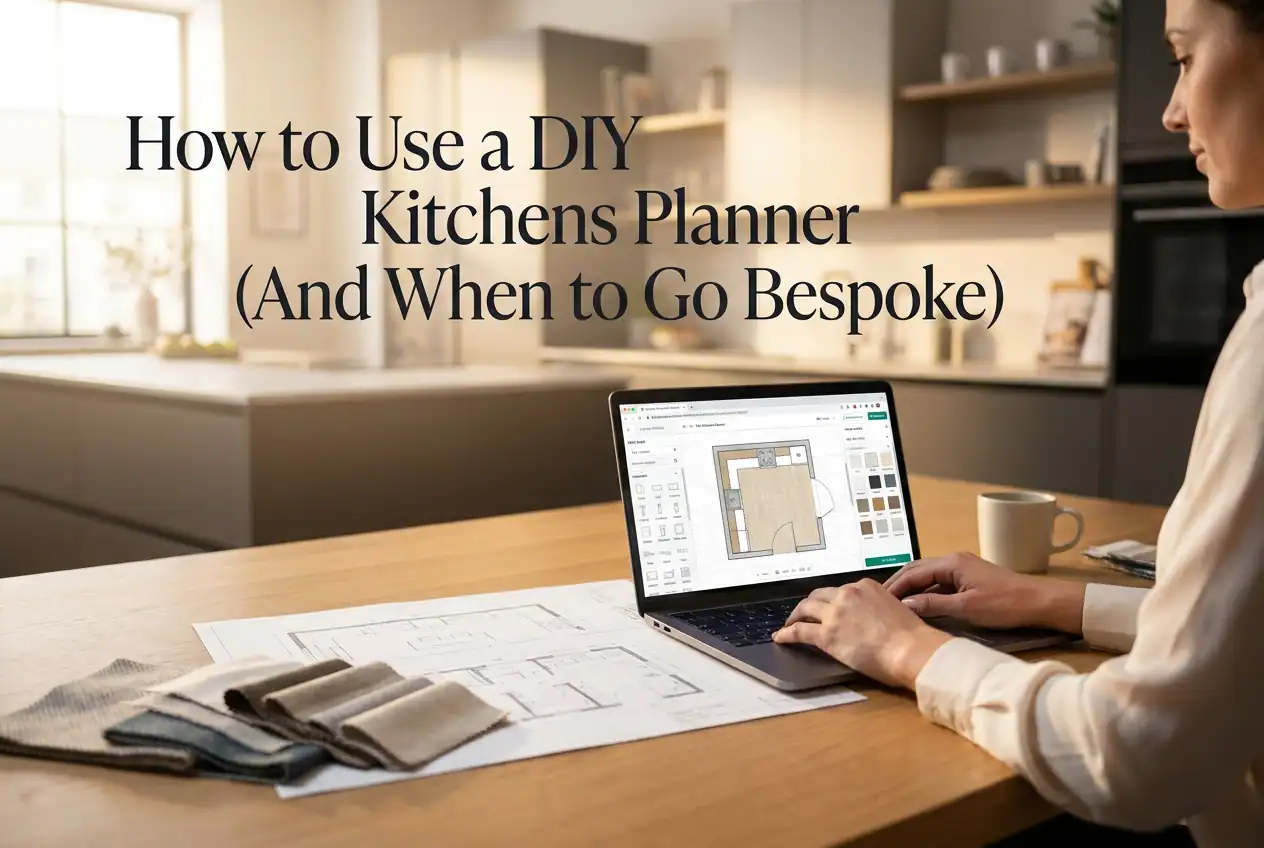
Expect an itemised quote. A transparent quote should separate design, materials, and fitting costs. This makes comparisons fair and prevents unwelcome surprises. If you are still weighing up whether to use a planning tool first, How to Use a DIY Kitchens Planner (And When to Go Bespoke) explains where professional design adds value that self-service tools cannot replicate.
Red flags to watch for: vague or bundled pricing with no breakdown, reluctance to share references, and an inability to show work in spaces comparable to yours.
Making the Right Choice for Your Kitchen
Once you know what to look for in an independent designer, the decision becomes straightforward.
These structural advantages, supplier flexibility, design problem-solving, transparent pricing, and genuine accountability, have each been examined in full above.
That said, national retailers are not the wrong choice by default. They offer real benefits, particularly for straightforward layouts and homeowners who value brand familiarity. The point is that they are not automatically the safest or most cost-effective option, and assuming otherwise is where many homeowners leave value on the table.
Getting at least one quote and consultation from a reputable local independent is the comparison that makes the choice clear, and many offer that initial conversation at no cost or obligation.
Broadoak Kitchens offers exactly that. Based locally and focused entirely on the finished result, the team works through your space, your brief, and your budget without pressure. It is a conversation, not a sales pitch. You can reach them on 0191 5033315 to arrange a no-obligation design consultation.
The right kitchen designer is the one who understands your room, respects your budget, and takes responsibility for delivering on the brief. That level of personal investment is where independent designers consistently have the edge, and it is the clearest reason to look beyond the national names first.
Conclusion
The case for looking beyond national retailers comes down to something straightforward: independent designers are more likely to understand your actual space, stand behind the finished result, and deliver genuine value across the whole project. That combination is closer and more affordable than most homeowners expect.