


The worktop is where the kitchen earns its keep. It carries hot pans, homework, grocery bags, Sunday lunch preparation, and the small everyday moments that make a kitchen the heartbeat of your home. Knowing how to choose worktops means looking beyond a showroom sample and selecting a surface that feels right, performs well, and complements the way your household actually lives.
A beautiful kitchen can be transformed by the right material, but the best choice is rarely based on appearance alone. Your cooking habits, cabinetry style, natural light, budget, and appetite for maintenance all deserve a place in the decision.
How to Choose Worktops for Everyday Living
Start with the honest version of daily life. A household that cooks from scratch most evenings, has young children, or regularly entertains will put different demands on a worktop than a kitchen used mainly for coffee, breakfast, and occasional meals.
Think about where the pressure points are. If the area around the sink is constantly wet, you may prioritize a non-porous material that is easy to wipe down. If you enjoy baking, a cool stone surface can be especially appealing. If the kitchen is a busy family hub, resistance to marks and simple cleaning may matter more than having a perfectly uniform finish.
It also helps to consider how you want the room to feel. A pale quartz can brighten a kitchen with limited daylight, while warm timber introduces character to painted cabinetry. A darker surface can create a dramatic contrast against lighter doors, but it may show crumbs, water marks, or fingerprints more readily depending on its finish.
The goal is not to find a material with no compromises. It is to choose the compromises that suit your home.
Compare Materials Before You Fall for a Color
A worktop sample is useful, but it cannot show how a surface will behave after years of use. Compare materials on both their visual qualities and their practical demands before making a final decision.
Quartz for consistent beauty and easy care
Quartz is a popular choice for fitted kitchens because it combines a refined appearance with dependable day-to-day performance. As an engineered stone, it is available in an extensive choice of colors and patterns, from clean whites and soft concrete effects to convincing marble-inspired veining.
Its non-porous surface makes it highly resistant to staining and straightforward to clean. This makes quartz particularly well suited to active family kitchens and homeowners who want a premium finish without the routine sealing associated with some natural stones.
Quartz is durable, but it is not indestructible. Use trivets for very hot pans and avoid cutting directly on the surface. A thoughtfully selected quartz can work beautifully with everything from contemporary handleless cabinetry to more detailed shaker-style doors.
Timber for warmth and natural character
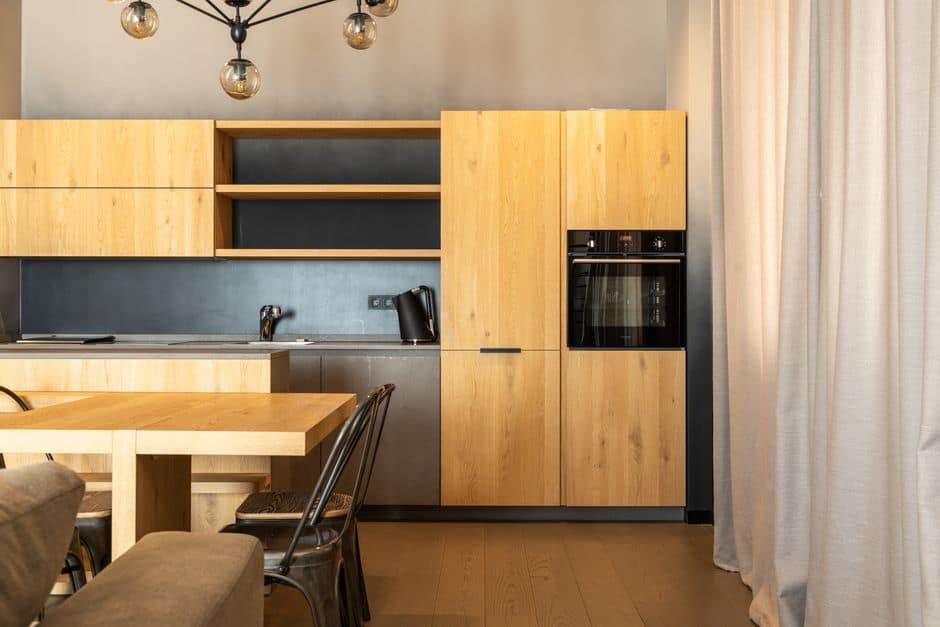
Timber worktops bring warmth that few other materials can match. Their grain, tone, and gentle variation can soften a modern kitchen or add an authentic, welcoming finish to a classic design.
They do require more care than quartz or laminate. Timber needs regular oiling to help protect it from moisture, particularly around sinks, and standing water should be wiped away promptly. Small scratches and marks can often be sanded and refinished, however, which is part of the appeal for homeowners who appreciate a material that develops character over time.
A timber section can also be used selectively. For example, pairing a timber breakfast bar with a more hardwearing stone or laminate preparation area gives the kitchen warmth without asking one material to do every job.
Laminate for versatile, considered value
Modern laminate is a far cry from the limited choices many homeowners remember. It can recreate the appearance of stone, timber, concrete, or solid color with impressive realism, often at a more accessible price point.
It is easy to clean, available in a broad range of finishes, and can be an excellent choice for kitchens where budget needs to be allocated carefully across cabinetry, appliances, lighting, and installation. Quality matters here. The look of the edge detail, the realism of the texture, and the care taken during fitting make a significant difference to the finished result.
Laminate is resilient for everyday use, though it is more vulnerable to heat and damage from sharp objects than stone. Always use a chopping board and avoid placing hot cookware directly onto the surface.
Natural stone and porcelain for distinctive impact
Natural stone offers unique movement and character, with no two slabs exactly alike. It can make a striking focal point in a design-led kitchen, but the specific performance and maintenance requirements vary by stone type. Some stones need sealing and may be more susceptible to staining or etching from acidic foods.
Porcelain is increasingly chosen for its slim, contemporary appearance and impressive resistance to heat, scratches, and UV light. It can be a strong option for both indoor kitchens and connected outdoor living spaces. Because it requires specialist fabrication and careful handling, professional templating and installation are especially important.
Choose a Finish That Works in Your Light
The same worktop can look entirely different in a north-facing room, a sun-filled extension, or a kitchen lit primarily by warm evening lighting. Take samples home where possible and view them beside your cabinet door, flooring, and wall color at different times of day.
A polished surface reflects light and can make a compact kitchen feel brighter, while a matte or textured finish creates a more understated look. Matte finishes are often forgiving of fingerprints, although heavily textured surfaces may need a little more attention around spills.
Pay close attention to veining and pattern scale. A bold marble effect can look spectacular across a large island, but a busy pattern in a small room may compete with decorative tile, statement hardware, or heavily grained cabinetry. If you love a strong surface, consider keeping surrounding finishes calm.
Plan the Details That Make It Look Bespoke
Worktop decisions extend beyond material and color. Thickness, edge profile, upstands, splashbacks, joints, and cutouts all influence the final appearance.
A thicker worktop can give an island visual weight, particularly in a spacious kitchen. A slimmer profile may better suit a streamlined, contemporary scheme. For a more tailored finish, consider whether you prefer a simple square edge, a softened profile, or a traditional shaped edge that complements the cabinetry.
Also think about transitions. A full-height splashback in the same quartz as the worktop can create a clean, cohesive backdrop behind the hob. Alternatively, a tiled splashback may introduce color and texture while allowing the worktop to remain the quieter element.
The sink and tap deserve early consideration too. An undermounted sink paired with quartz or porcelain creates an elegant, easy-to-clean run of surface, while a Belfast-style sink may be better suited to a more classic kitchen. If you are considering a boiling-water tap, filtration system, or integrated draining grooves, these requirements need to be incorporated into the template and fabrication plan.
Set a Budget for the Whole Surface, Not Just the Slab
It is easy to compare worktops by a starting price, but the installed cost depends on far more than the material itself. The number of joins, cutouts for sinks and hobs, drainage grooves, upstands, polished edges, island size, and access to the property can all affect the final figure.
A good kitchen plan helps you spend where it matters. You may choose a premium statement material for the island, where it will be seen and used most, then select a complementary surface elsewhere. Or you may prioritize a durable, low-maintenance material throughout because the kitchen needs to handle constant family use.
Avoid making the choice in isolation. A worktop should be specified alongside the cabinetry, appliances, sink, tap, and installation requirements so there are no unwelcome surprises once fitting begins.
Why Professional Templating Matters
Stone, quartz, and porcelain worktops should be templated only after the base cabinets have been fitted, leveled, and secured. This allows measurements to reflect the real room rather than an early plan, which is essential in older homes where walls and corners are rarely perfectly square.
Professional coordination also protects the design intent. Appliance clearances, sink specifications, tap holes, and splashback dimensions must all be confirmed at the right stage. A well-managed installation means each trade works to the same plan, helping the finished kitchen feel carefully resolved rather than assembled in separate parts.
With more than 26 years of fitting experience, Broadoak Kitchens helps homeowners make these decisions as part of a complete kitchen design, supply, and installation service. That joined-up approach is particularly valuable when the smallest detail, from an edge profile to the position of a joint, can influence the whole room.
Your worktop will be one of the most touched surfaces in your home. Choose one that you will enjoy seeing in the morning, trust during the busiest evenings, and still appreciate long after the excitement of a new kitchen has settled into everyday life.


Leave a Reply
You must be logged in to post a comment.